Vegetable garden basics
Plan, Build, and Grow a Vegetable Garden That Fits Your Space
A vegetable garden can be a few planting boxes on a patio or a backyard of raised beds. This guide walks through each step: picking the spot, sizing the beds, filling them with good soil, and choosing what to plant first.
- 6+ hoursof direct sun a day, per Wisconsin Extension
- About 1 inchof water a week, per Iowa State
- 4 feet wideat most for beds, per UGA and Oklahoma State
The basics
What Is a Vegetable Garden?
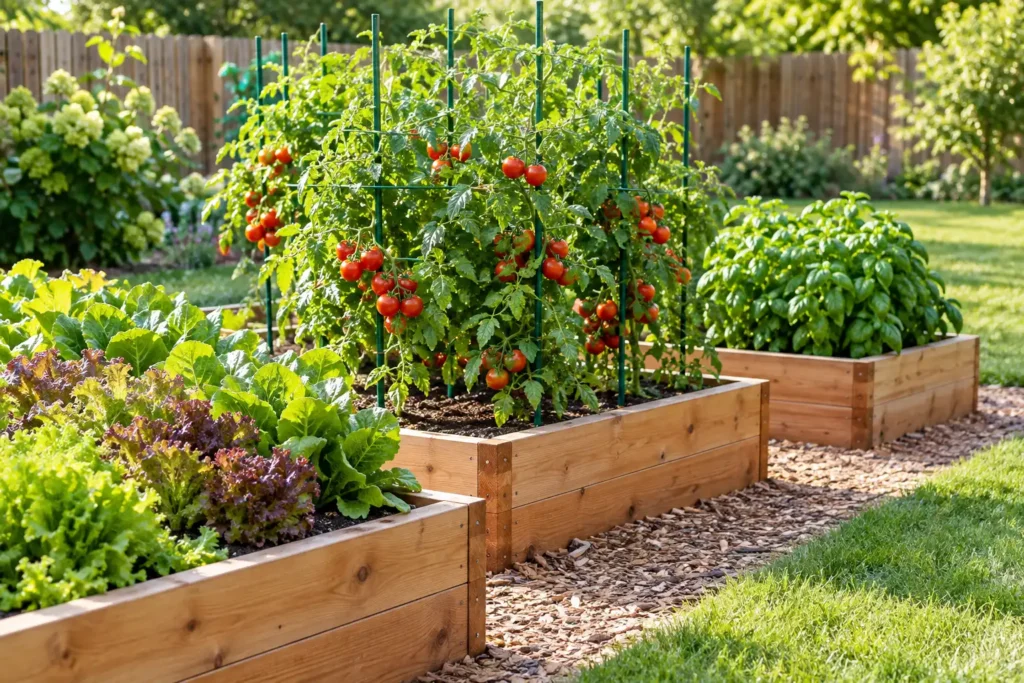
A vegetable garden is a plot set aside for growing plants you eat, such as tomatoes, beans, lettuce, and herbs. It can be rows dug into the ground, framed raised beds, or planting boxes on a patio or deck.
Size does not define it. One 4 by 8 foot bed counts. Every vegetable garden needs the same four things: direct sun, soil that drains, water close by, and crops planted in the right season.
In-ground rows
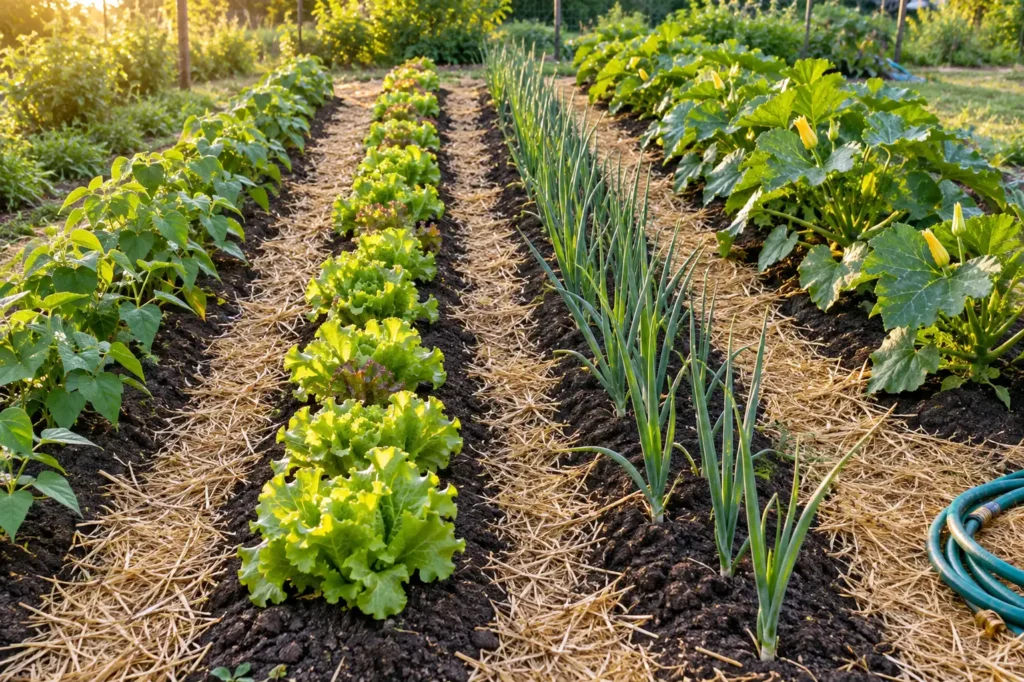
Planted straight into your native soil. The cheapest way to start, and the roomiest for corn, potatoes, and winter squash.
Raised beds
Framed beds filled with improved soil. They warm and drain sooner in spring, so you can plant earlier.
Planting boxes
Boxes, pots, and grow bags for patios, decks, and balconies. Match the container size to the crop.
Kitchen garden
A small mixed plot by the house with salad greens, herbs, and a few tomatoes you pick every day.
Start here
How to Start a Vegetable Garden From Scratch
Turning bare lawn into a vegetable garden takes seven steps. You can do most of them the season before you plant, which spreads out the work.
Follow the stepping stones in order. If you are building raised beds, steps 4 and 5 get easier, since you fill the beds with new soil instead of digging.
Before you dig, call 811 so buried utility lines get marked. It is free.
Pick the sunniest spot
Most vegetables need at least six hours of direct sun a day, per University of Wisconsin Extension. Choose level ground that drains after rain and sits within reach of a hose. Avoid low frost pockets and the root zone of black walnut trees, which give off chemicals that stunt many vegetables.
Start smaller than you think
Purdue Extension says a 100 square foot plot should be plenty for a first garden. New gardeners tend to plant more than they can weed and water. You can add beds next year.
Test the soil
A lab soil test reports pH, organic matter, phosphorus, and potassium. University of Wisconsin Extension suggests a pH near 6.5. Most vegetables handle 6.0 to 7.2. Your state extension service can point you to a lab.
Clear the grass
Strip the sod with a rented sod cutter or a flat shovel, and shake the loose soil back into the bed. Then cover the spot with cardboard, a tarp, or black plastic to smother what is left. Starting the year before you plant gives this time to work.
Add compost or build beds
Work 2 to 3 inches of compost into the soil at least a month before planting, per Wisconsin. On heavy clay, rocky ground, or a spot you cannot dig, a raised bed filled with better soil is often the easier start.
Plant on time
Soil temperature sets the date. Cool-season crops like lettuce and peas go in early. Tomatoes and peppers wait until after the last frost. See the planting guide below.
Water and mulch
Give the garden about 1 inch of water a week from rain and watering combined. Spread mulch once the soil has warmed. See the care section.
Small garden plan
How to Start a Small Vegetable Garden
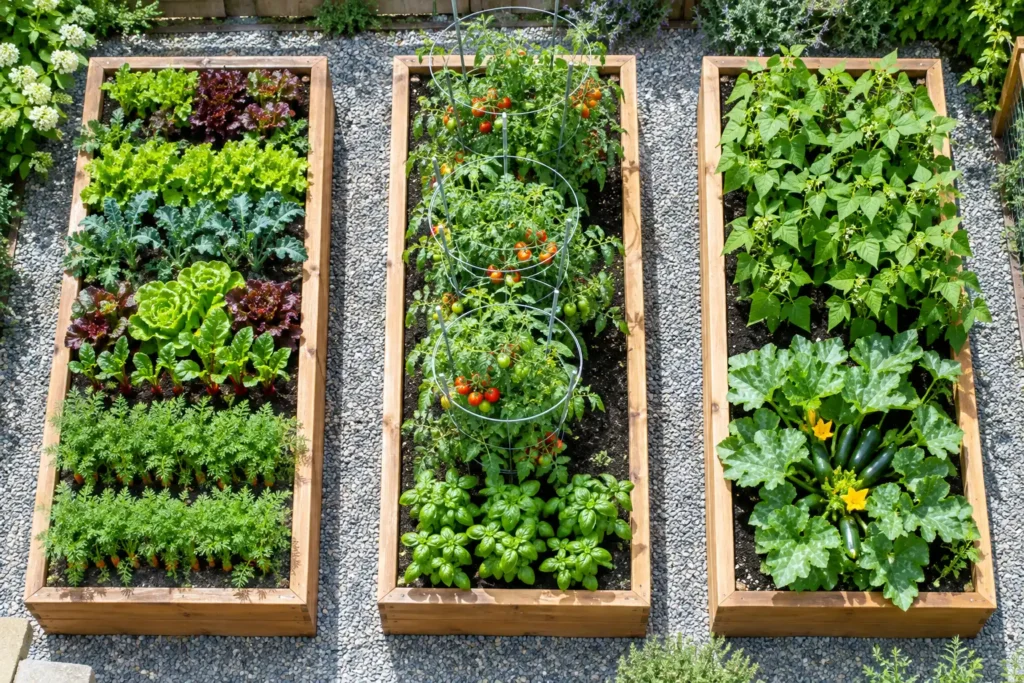
A small garden is easier to plan and easier to keep up. Purdue’s 100 square feet fits three 4 by 8 foot beds, which gives you 96 square feet of growing space.
- Draw the plan to scale on graph paper first, as University of Wisconsin Extension suggests.
- Look up each crop’s mature size so plants do not crowd each other.
- Choose bush varieties of squash. They take less room than vining types.
- Leave paths 18 to 24 inches wide, the range UGA Extension calls ideal.
Raised beds
Raised Garden Beds for Vegetables: Size, Soil, and Materials
Raised beds are one of the easiest ways to start a vegetable garden, especially on poor soil. Oklahoma State Extension notes that soil in raised beds warms sooner, drains better, and can be worked earlier in spring. Even a 6 inch rise above the ground greatly improves drainage.
They also fit more plants in less space, since less ground goes to walking paths.
How big should a raised bed be?
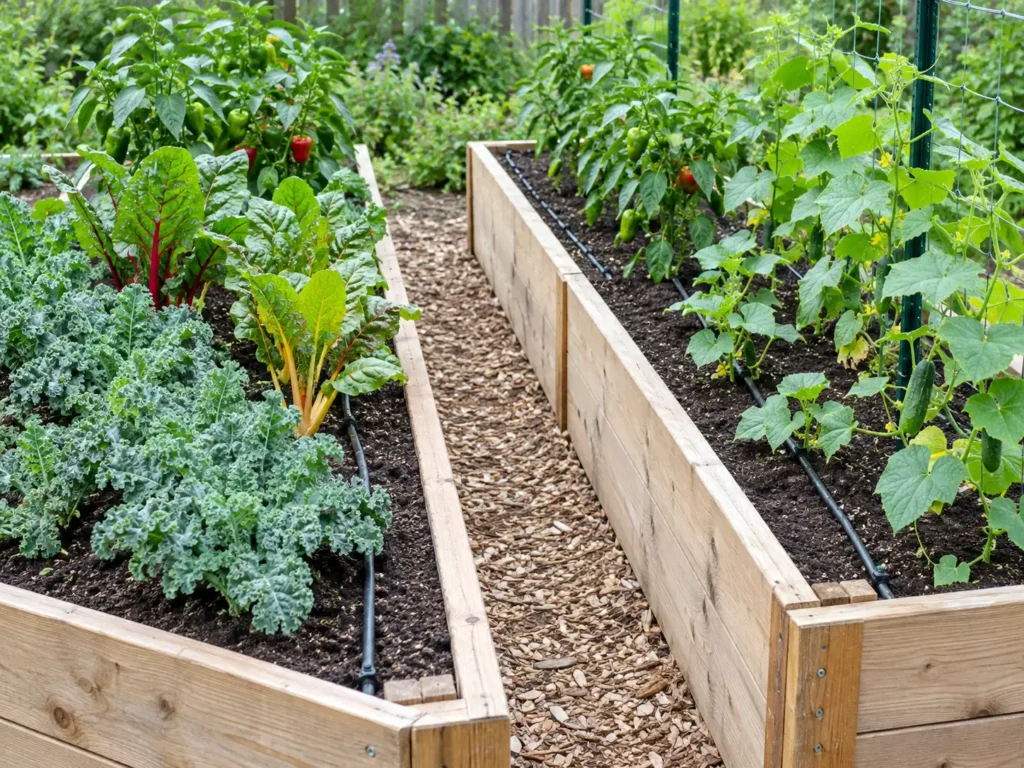
- Width4 feet for adults and 3 feet for children, per UGA Extension, so you can reach the middle from either side.
- Soil depthAt least 10 inches for most crops. If the bed is shallower, loosen the ground beneath it (UGA).
- Length8 feet is common (Oklahoma State). Lumber comes in 8, 10, and 12 foot lengths.
- Paths18 to 24 inches is ideal, and 12 inches is the minimum. Allow 4 feet for a wheelbarrow or wheelchair (UGA).
- HeightBeds 18 to 24 inches tall let you work sitting on the edge (Oklahoma State).
What to fill a raised bed with
Use a mix high in organic matter that holds water and nutrients, per Oregon State University Extension. Oklahoma State suggests alternating layers of compost and soil.
Organic matter breaks down, so top up each year. In Oklahoma’s heat, Oklahoma State adds a 2 inch layer of compost each spring and fall.
Raised beds compared
Not sure raised beds are right for your yard? The table below compares them with in-ground rows and planting boxes.
| In-ground rows | Raised beds | Planting boxes | |
|---|---|---|---|
| Best for | Large crops: corn, potatoes, winter squash | Most vegetables, and clay or poor soil | Patios, decks, balconies, renters |
| Soil | Your native soil, improved with compost | Imported mix high in organic matter | Bagged mix made for containers |
| Spring start | When the ground dries out | Earlier, since beds warm and drain sooner | Boxes can move to the sunniest spot |
| Watering | About 1 inch a week, rain included | Water the beds, not the paths, ideally with drip | Often, since roots cannot spread |
| Setup work | Strip sod and dig | Build frames and buy soil | Buy boxes and mix |
Which materials are safe for vegetable beds?
Cedar or redwood
Oregon State University Extension calls them a long-lasting, safe choice, though they cost more. Oklahoma State notes they still rot faster than treated lumber where they touch soil.
Modern treated lumber
Oklahoma State says treated wood sold today no longer carries the toxic chemicals older wood did. In Oregon State research, soil copper rose only within about 1 inch of the boards, with no rise in the vegetables tested. Wear a mask and gloves when you cut it.
Skip these
Railroad ties and old treated wood that may contain creosote or other chemicals, per Oregon State. Concrete blocks, stone, and brick are fine, but count their width in your layout.
Soil calculator
How Much Soil Does a Raised Bed Need?
Multiply length by width by depth. Measure length and width in feet and depth in inches, then divide by 12 for cubic feet. Divide cubic feet by 27 to get cubic yards.
A 4 by 8 foot bed filled 10 inches deep takes about 27 cubic feet, which is close to 1 cubic yard.
For the yearly top-up: Oregon State Extension notes that a cubic yard covers 162 square feet 2 inches deep.
Mixes settle after the first few waterings, so expect to add a little more in the first season.
Planting boxes
Planting Boxes for Garden Vegetables
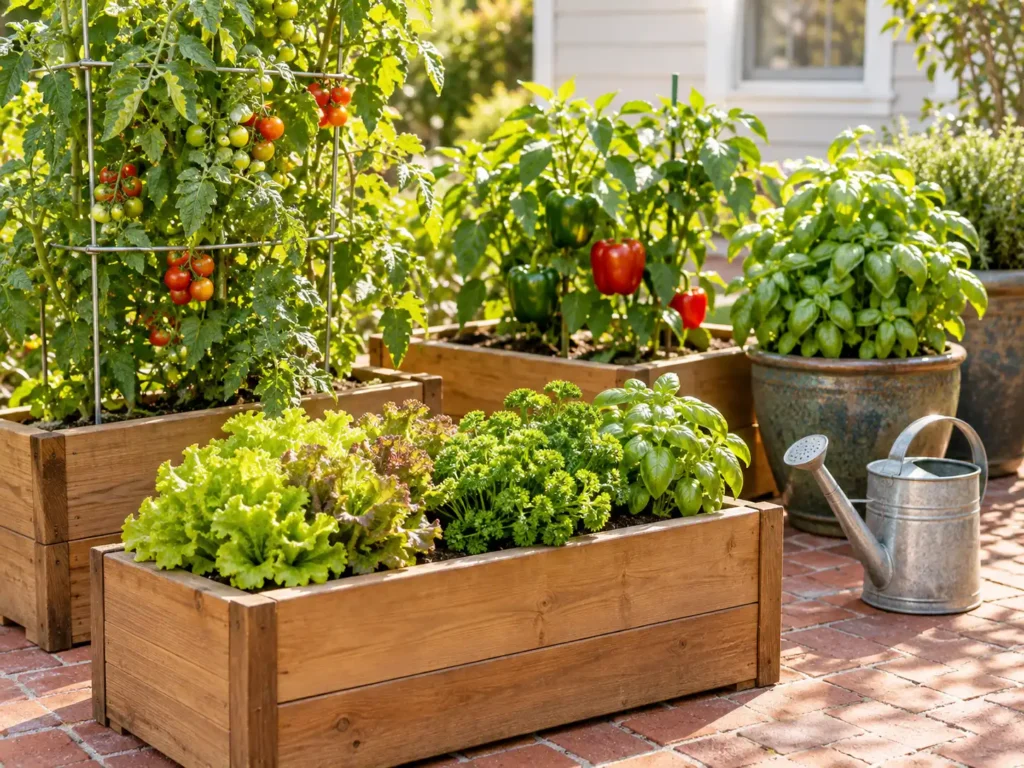
No yard? Planting boxes and containers grow good food on a sunny patio, deck, or balcony. Colorado State University Extension notes that bigger containers are easier to care for, because they hold more water and nutrients.
Roots in a box cannot spread to find water, so plan to water and fertilize more often than you would in the ground.
| Vegetable | Minimum depth | Size per plant, where listed |
|---|---|---|
| Tomatoes | 12 in | 2 to 5 gallons, by variety |
| Peppers | 8 in | 2 to 5 gallons |
| Eggplant | 8 in | 4 to 5 gallons |
| Cucumbers | 8 in | 3 gallons or more |
| Zucchini | 8 in | 5 gallons, plus a 36 by 36 in space |
| Broccoli, cabbage, kale | 10 in | 5 gallons |
| Carrots | 12 in | Not listed |
| Bush or pole beans | 8 in | A long box 12 in wide, pole beans on a trellis |
| Lettuce, spinach, chard, radishes | 8 in | Not listed |
| Green onions | 6 in | Not listed |
Timing
When to Plant a Vegetable Garden
Soil temperature is the best guide to planting time, per University of Minnesota Extension. Cool-season and warm-season crops run on different clocks.
Soil at 40 to 50°F: sow peas, spinach, lettuce, and radishes
Broccoli, cabbage, cauliflower, and onions go in early too. They need to mature before hot weather sets in.
Soil at 50 to 60°F, after the last frost: plant tomatoes and peppers
Eggplant, summer squash, and basil wait for warm soil as well. In short-season states like Minnesota, set them out as transplants, since they will not mature from seed sown in the garden.
- Sow some crops in placeRadishes, carrots, and beets do not transplant well. Sow them right where they will grow.
- Harden off transplantsGive them a few days outdoors in light shade, and water a bit less, before planting. This cuts transplant shock.
- Know your frost dateAverage last frost dates vary widely across the country. Your state extension service publishes local dates.
What to grow
Easy Vegetable Plants for Your First Garden
University of Wisconsin Extension names beans, beets, herbs, lettuce, onions, potatoes, radishes, squash, and tomatoes as good first crops. Here is how each one fits a first garden.
Tomatoes
Warm season- Plant
- Transplants, after the last frost
- In a box
- 12 in deep, 2 to 5 gallons
- Tip
- Give each plant a cage or trellis so mature plants do not touch.
Lettuce
Cool season- Plant
- Seed or transplants, early spring
- In a box
- 8 in deep
- Tip
- Leaf lettuce can be sown again in late summer for a fall crop.
Beans
Warm season- Plant
- Seed, after the last frost
- In a box
- 8 in deep
- Tip
- Bush beans need no trellis. Pole beans need one.
Radishes
Cool season- Plant
- Seed, sown in place
- In a box
- 8 in deep
- Tip
- They do not transplant well, so sow them where they will grow.
Squash
Warm season- Plant
- Seed or transplants, after frost
- In a box
- 5 gallons per zucchini
- Tip
- Pick bush types for small beds.
Beets
Cool season- Plant
- Seed, sown in place
- In a box
- 8 in deep
- Tip
- Like radishes and carrots, beets go straight into the bed.
Onions
Cool season- Plant
- Sets or transplants, early spring
- In a box
- 6 in deep for green onions
- Tip
- Bulb onions need steady water while the bulbs grow.
Potatoes
Cool season- Plant
- Seed pieces, early spring
- In a box
- Deep bed or large bag
- Tip
- On a hard surface, a 10 in bed may be too shallow.
Herbs
WarmCool- Plant
- Basil after frost, parsley early
- In a box
- Small pots work
- Tip
- Plant them near the kitchen door so you use them.
Season and planting method from University of Minnesota Extension. Box sizes from Colorado State University Extension. Bed depth note from UGA Extension.
Grow what you will eat
The best first crops are the ones your household already buys. A bed of salad greens and herbs gets used every week. A row of something nobody likes is wasted space and water.
Mix cool-season and warm-season crops, and the same beds can give you a spring harvest, a summer harvest, and a fall one.
Care
How to Grow a Vegetable Garden Through the Season
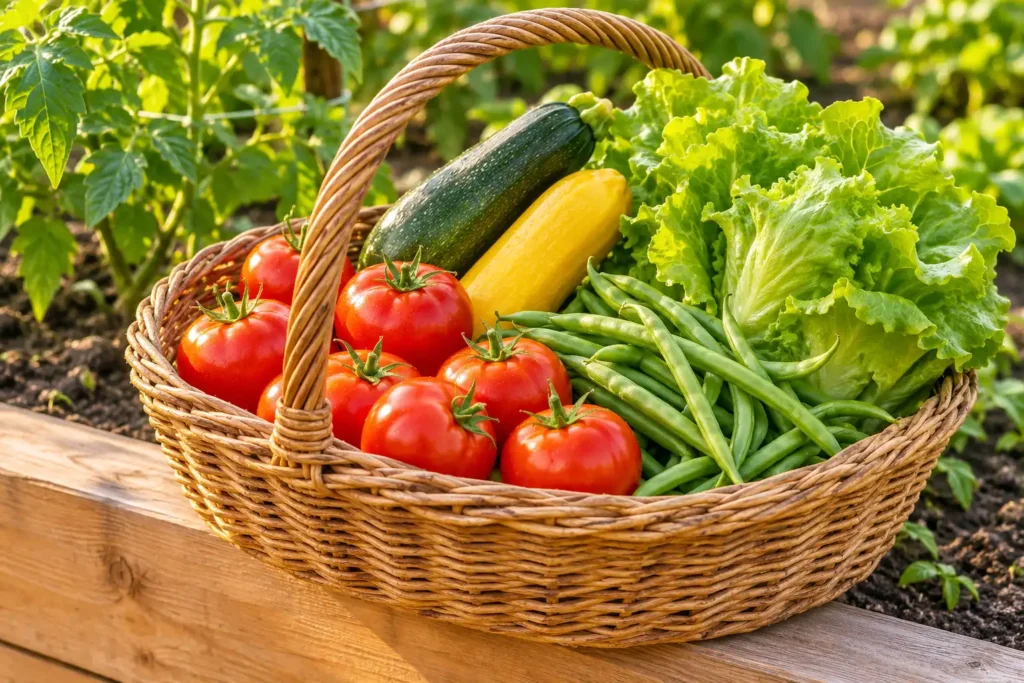
Once the garden is planted, steady water, mulch, and a quick weekly walk keep it on track. These figures come from Iowa State Extension.
Watering
- Most vegetable gardens need about 1 inch of water a week, from rain and watering combined.
- One thorough watering a week beats frequent light ones. Wet the soil 6 to 12 inches deep.
- Water in the morning or early afternoon so leaves dry quickly.
- Drip irrigation often uses 30 to 50 percent less water than other methods.
- Sandy soil and young plants need water more often.
- To check a sprinkler, set out a few straight-sided cans and stop when they hold 1 inch.
Mulching
- Spread several inches of mulch after the soil has warmed. In Iowa, that means early June.
- Good choices: weed-free straw, shredded leaves, and grass clippings.
- Mulch holds moisture, blocks weeds, and cuts evaporation.
When water matters most
- Tomatoes, peppers, eggplantFlowering and fruit set
- Beans, peas, squash, cucumbersFlowering and fruit set
- Broccoli, cabbage, cauliflowerHead development
- Carrots, beets, radishesRoot growth
- OnionsBulb development
- PotatoesTuber growth
- Sweet cornTasseling and ear fill
Your weekly garden walk
- Check a rain gauge, and dig a small hole to see how deep the soil is moist.
- Pull weeds while they are small.
- Look under leaves for insects, eggs, and spots.
- Pick crops as they ripen, before they get tough or overgrown.
- Something looks wrong? Many plant problems look alike, so take a photo or sample to your county extension office for an answer.
Before You Dig: Lead, Old Paint, and Buried Lines
Lead in garden soil comes mainly from old house paint and leaded gasoline, per University of Wisconsin Extension. It suggests testing soil near homes built before 1979, old orchards, busy roads, and former industrial land.
- Keep vegetable beds at least 20 feet from painted structures and busy streets.
- Wash all produce well, and peel root crops like carrots, which hold more lead.
- On contaminated soil, raised beds filled with new soil are a practical alternative, per Oregon State University Extension.
- Call 811 before you dig deep for posts or beds.
Topics
Browse the Vegetable Garden by Topic
Every guide sits in one of seven beds. Pick the one that matches your next job.
Garden Planning
Where to put a new garden, how big to make it, clearing the ground, and layouts and plans for every size, from one bed to a full backyard.
Site, size, layouts, spacing, rotationRaised Beds and Planting Boxes
Bed sizes, materials, filling soil, and containers.
Build, fill, and plantPlanting and Timing
Frost dates, soil temperature, seeds, and transplants.
When and how to plantVegetables to Grow
Crop guides from lettuce to tomatoes, by season.
Cool-season, warm-season, herbsSoil and Care
Compost, fertilizer, watering, mulch, and weeds.
Keep the garden growingPests and Problems
Insects, diseases, and plant problems, described.
Prevention firstGear
Raised bed kits, planters, tools, and watering gear.
What to check before you buy
Fresh from the editors
Latest Vegetable Garden Guides
- Raised Beds
How Deep Should a Raised Bed Be for Vegetables?
Most crops need 10 inches of soil. Here is when to go deeper, and how to loosen the ground below.
- Planning
A 100 Square Foot Vegetable Garden Plan for Beginners
Three 4 by 8 foot beds, what to plant in each, and how to fit the paths.
- Planting
When to Plant Tomatoes: Read the Soil, Not the Calendar
Why soil temperature and the last frost date matter more than a date on the calendar.
- Planting Boxes
What Size Planting Box Does Each Vegetable Need?
Container depth and gallons for tomatoes, peppers, greens, and more.
- Soil and Care
How Much Water Does a Vegetable Garden Need in Summer?
One inch a week, how to measure it, and the crop stages that need it most.
- Vegetables
Bush Beans vs Pole Beans for a Small Garden
Space, trellis needs, and harvest timing compared, so you can pick the right one.
Questions
Vegetable Garden FAQs
What is the easiest way to start a vegetable garden?
Start with one or two raised beds, or a plot of about 100 square feet in full sun. Purdue Extension calls 100 square feet plenty for a first garden. Then grow a few easy crops, such as lettuce, beans, and tomatoes.
How deep should raised beds be for vegetables?
Give most crops at least 10 inches of soil, per UGA Extension. If your bed is shallower, loosen the ground underneath so roots can reach down. Potatoes and carrots do better with more depth.
What should I fill a raised garden bed with?
Use a mix high in organic matter that holds water and nutrients, per Oregon State University Extension. Oklahoma State suggests alternating layers of compost and soil. Add fresh compost each year as the old breaks down.
Are planting boxes good for growing vegetables?
Yes, if they are big enough and get full sun. Colorado State University Extension lists 12 inches deep for tomatoes and 8 inches for lettuce, peppers, and beans. Larger boxes hold more water, so they are easier to keep up.
How much sun does a vegetable garden need?
At least six hours of direct sun a day, per University of Wisconsin Extension. Check the spot from late morning through the afternoon, when shade from trees and buildings matters most.
How often should I water a vegetable garden?
Aim for about 1 inch of water a week from rain and watering combined, per Iowa State Extension. One deep watering beats several light ones. Sandy soil, containers, and young plants need water more often.
Is pressure-treated wood safe for raised vegetable beds?
Modern treated lumber is widely used. Oregon State research found soil copper rose only within about 1 inch of the boards, with no rise in the vegetables tested. Avoid railroad ties and old treated wood.
When should I plant my vegetable garden?
Go by soil temperature, not the calendar. University of Minnesota Extension sows peas, spinach, and lettuce in 40 to 50°F soil. Tomatoes and peppers wait for 50 to 60°F soil and the last frost.
How we work
How We Research Vegetable Garden Guides
A Vegetable Garden is an independent reference operated by Jum Garden. Our Editorial Team does not run test plots or report its own harvests. Every figure comes from university extension services and US government agencies, and we name the source in the sentence so you can check it.
- When two sources disagree, we show both ranges instead of averaging them.
- We describe plant problems but do not diagnose them. Your county extension office can.
- We update guides when sources change, and we fix errors quickly.
Read our editorial policy for the full process.
Sources used on this page
- University of Wisconsin Extension: site selection and soil preparation
- Purdue Extension: advice for first-time gardeners
- UGA Extension: raised garden bed dimensions (C 1027-4)
- Oklahoma State Extension: raised bed gardening
- Oregon State University Extension: raised bed gardening (FS 270)
- Oregon State University Extension: treated wood in raised beds (EM 9879)
- Colorado State University Extension: vegetables in containers
- University of Minnesota Extension: planting the vegetable garden
- Iowa State Extension: watering the home vegetable garden
- University of Wisconsin Extension: lead in home garden soil
Questions or corrections?
Write for help with the site, or to report an error or suggest a guide.